


The Austin City Council has shown continual disregard for both the laws of the State of Texas, and for the health & safety of its citizens. The Austin City Council should remember that the city is a political subdivision of the State of Texas – and derives its authority from the State. There is already growing momentum in the Texas Legislature for the State to strip the City of Austin of its autonomy and take over city governance.

“As Texas Land Commissioner, I am charged with determining whether granting an easement to access state-owned submerged land for transmission lines to shore is in Texas’ best interest. Right now, I see significant economic, practical, and environmental concerns,” said Texas Land Commissioner, Dawn Buckingham, putting the Biden White House on notice that its second proposal for an Offshore Wind Energy Sale may be in trouble.

"I applaud the University of Texas' President Jay Hartzell for enforcing Law & Order on campus. Protecting students from criminal acts and ensuring they have access to the classroom should not be a novel concept – however, on many campuses today, university leaders have abdicated their responsibility to protect students in exchange for pandering to the threats & criminal agenda of a minority mob of protestors," said former university Vice Chancellor and Texas Congressman, Jodey Arrington.

America’s exceptional founding – on ideals and aspirations rather than tribe or blood – made it possible to put the evils of slavery and segregation firmly in the past where they must stay. But as we head into a fateful election, Americans will hear accusation after accusation slung by politicians, their mouthpieces, and media on both sides. As the noise reaches its inevitable deafening crescendo, it will become more and more difficult to separate fact from farce – and discern who's telling the truth.

We’re living in a country dominated by Racial Politics, Divisive DEI Programs, Antisemitism, self-centered politicians, and totally avoidable Foreign Wars. But, all is not lost if we can learn something from the Hamas-Hitler Youth that are taking over our College Campuses. Let’s say we start by firing Tenured Professors. If we can fix our nation's colleges, we can fix most of what’s wrong with America. Maybe even judges across the nation would realize the American People are clawing back!
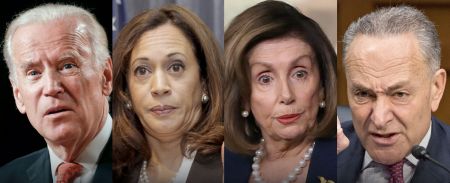
As Americans we know right from wrong. We know our nation’s history – and where we did or didn’t do well. We know our place on Earth, and why people from around the globe seek to come to America while virtually no one wants to leave. But as "The Left" continues to force its outlandish & radical ideas on the rest of us, will the pushback, disgust & outrage be equal to if not greater this November? Many on the Woke Democrat Left are even concerned about the direction Democrats are heading.


“My heart is heavy, and I'm sad to announce the passing of my longtime friend Kevin Burnette," said Cong. Pete Sessions, following the unexpected death of his Texas Congressional District 17 District Director, Kevin Burnette, who passed away Sunday night. "A veteran of public service & Congressional Politics for over five decades, Kevin worked a fulfilling career – and left an enduring impact on his state and his peers. It was an honor to know him, and a privilege to work with him," said Sessions.
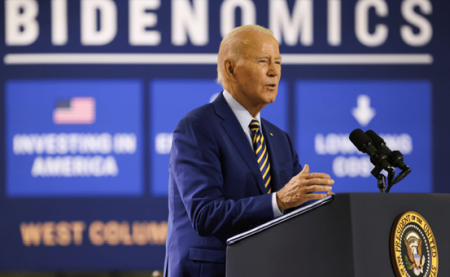
To mitigate some of the damage that's been caused among Black Voters by inflation the past few years – with 94% saying inflation & prices are "important," including 77% who say it's "very important" – Vice President Kamala Harris on April 29th began a multi-state "Economic Opportunity Tour" in Atlanta, Georgia. The tour is directed at shoring up black voters in swing states that'll be essential to Joe Biden’s bid to be reelected. But will Kamala be able to sell the Biden economy and get voters to ignore inflation?

U.S. Sen. Ted Cruz (R-Texas), Ranking Member of the Senate Commerce, Science, and Transportation Committee, sent a letter to Patricia de Stacy Harrison, the President and CEO of the Corporation for Public Broadcasting (CPB), questioning her about taxpayer-funded National Public Radio’s (NPR) reporting, which has become increasingly liberal and partisan in recent years.


"Small businesses are the very backbone of the mighty Texas economy" said Gov. Greg Abbott, lauding the crucial role Texas’ 3.2 million Small Businesses play in our state’s innovative, thriving economy – while inviting Texans to celebrate "2024 Small Business Week" in Texas. In recognition of the many contributions and achievements of Texas small businesses, the Governor issued a proclamation officially designating April 28-May 4, 2024 as Small Business Week.

"I encourage all Texans to come and pay their respects to the Veterans who are participating in the Dedication Ceremony, and take a moment to reflect upon the sacrifices of the service members who've fought in these wars," said Texas Land Commissioner & Veterans Land Board Chairwoman Dawn Buckingham, announcing the VLB's War Monument Dedication Ceremony at the Coastal Bend State Veterans Cemetery (TSVC) in Corpus Christi on Friday, May 3, 2024, at 11:00 a.m.

The Supreme Court recently heard oral arguments in Idaho/Moyle v. United States regarding Joe Biden’s "Emergency Medical Treatment & Labor Act" (EMTALA) guidance – a blatantly transparent attempt to use existing Federal Laws to force physicians across the nation to perform abortions, especially in states with pro-life protections. As a board-certified obstetrician, I have practiced under EMTALA for over 30 years, and it has never been confusing to me – or to any of my peers.

What we're seeing on College Campuses across the country is disgusting and unacceptable. Universities must protect students instead of allowing pro-Hamas supporters to take over property or spew HATE. Hamas is a Terrorist Organization. ‘Gaza Solidarity Encampments’ and Antisemitism have no place here and will not be tolerated. I will fight and speak out against all forms of antisemitism, and work to protect our Jewish brothers and sisters. This is America.

When folks drive down an Interstate Highway, we often don’t understand the work that goes into creating them. I’ve been working on transportation issues for over 21 years, and the just passed designation of I-27 and I-14 – which will connect over 85% of Texas’ population and impact more than 95% of Texas’ future GDP – is one of the most significant wins for the Lone Star State I’ve ever seen. It's impossible to overstate just how much the lives of Texans will benefit over the next 100 years.

"I urge Texans all across Congressional District 23 to join me in supporting Tony Gonzales for re-election in the upcoming May primary runoff election," said Gov. Greg Abbott, adding, "Tony's a fierce champion for bolstering border security measures in Congress, and he represents more than two-thirds of the Texas-Mexico Border. He knows the dangerous consequences that President Joe Biden's reckless open border policies have on our state – and our nation," said Abbott.


Title IX is a Civil Rights Law granting protections to women by prohibiting discrimination on the basis of sex in any educational program that receives federal money – including K-12 schools, Colleges & Universities. Mr. Biden's new rules contort these protections for women by forcing schools to accommodate the wishes of men claiming to identify as women (or “transgender,”) and allows them to enter female-only spaces and join female-only organizations.

Sometimes, good parents raise bad kids. It is possible to do everything right and still churn out a real piece of post-digested food. It happens. It just doesn’t happen very often, which is why it’s pretty easy to look at the mutant mob and professional protester class currently staging mini-Beer Hall Putschs they hope will weave together into a one, large real opportunity for them to murder as many white people, normal people, straight people, non-obedient people and especially Jews as possible. Fascists always have a real problem with Jews.

In the latest Gallup Poll conducted April 1st-22nd, things have gone from bad to worse for the nation's 81-year-old Democrat president. According to the latest polling figures released today by Gallup, Joe Biden now has to the lowest "Approval Rating" for any president at this point in their 1st Term – and the record low comes as the Biden White House struggles to adequately address even one of the major issues Americans say is their top concern.


