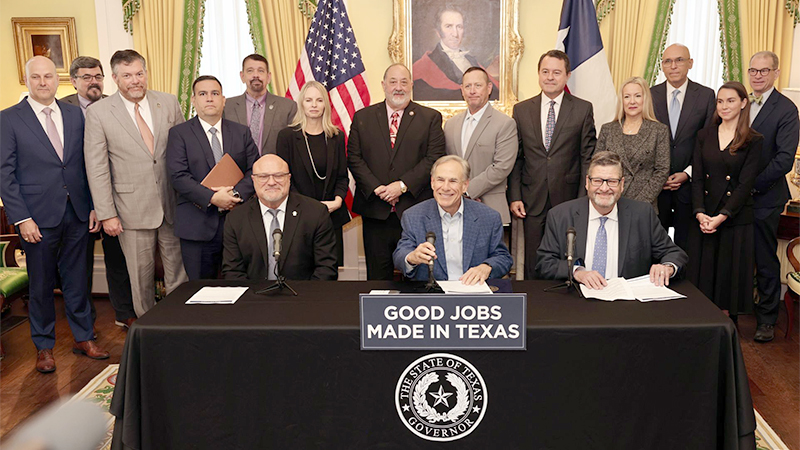
Governor Greg Abbott celebrated Texas as America’s jobs leader with today’s U.S. Bureau of Labor Statistics employment release showing Texas led all states with a gain of 154,300 jobs over the last 12 months. With an annual growth rate of 1.1 percent, Texas outpaced the national rate by 0.8 percentage points. Today, Texas is the top state for attracting new, job-creating business investment and the top state for small business job creation.

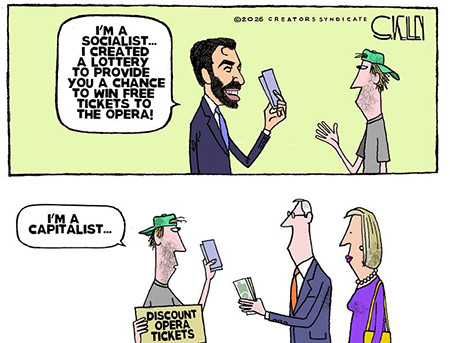
Rarely in American history have the two parties been so far apart or the choice between them so stark. In brief, Islamist-sympathizing socialism is on the ballot against free-market capitalism and American exceptionalism. The new Islamist-allied socialist Democratic Party is confident, largely because the party holding the White House has increased its share of House seats in a midterm election only three times since 1900. Each of those exceptions arose under unusual circumstances.

RRC Commissioner Wayne Christian praised remarks by U.S. Energy Secretary Chris Wright during his Tuesday visit to Houston, where Wright highlighted the economic opportunities presented by responsible data center expansion, the importance of investing in energy infrastructure and the U.S. Department of Energy’s $50 million investment in Texas grid resilience. Christian emphasized that lawmakers must respect each Texas community's decision on data center development.
Texas FIRST goes on offense against crimes including government corruption, government fraud, sales tax fraud, and unclaimed property fraud. The team identifies, investigates, and dismantles schemes that steal taxpayer money, exploit state programs, and corrupt government — and recovers what was taken. Texas FIRST works alongside the division’s regional investigators across Texas and partners with local, state, and federal law enforcement.

Seven Harmony Public Schools-Central Texas campuses have been named to the U.S. News & World Report Best Elementary Schools and Best Middle Schools rankings. All eligible campuses in the region earned a place on the list. The rankings cover about 47,000 public elementary schools and more than 23,000 public middle schools nationwide. Schools are ranked at the state and district levels, and charter schools are ranked in their own category within each state.

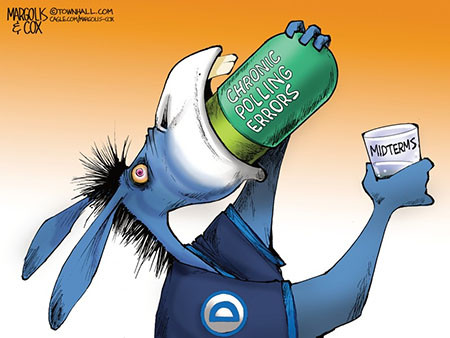
Two decades ago you had to call about three random numbers to get one to answer. By 2025, Pew Research had to reach about 140 random call numbers just to get one response. And now it’s 2026 — not 2016, 2008, or 1992. If pollsters botched election predictions back then – when people still answered phones and large demo groups still voted predictably — what do you think will happen when they don’t? Yet we’re still extrapolating polling predictions based on any weirdo who’ll to take a poll that 139 other people have already rejected!

Ever wonder why the Leftwing Establishment Media never criticizes or questions the new Socialists, Communists & Islamists that control and make up the Democrat Party? The New York Times, the Washington Post, the LA Times, Time, Newsweek, ABC, NBC, CBS and CNN are part of a coordinated campaign to sanitize, normalize, and romanticize history’s most Dangerous & Lethal Ideologies. For example, Newsweek is currently running a “Little Red Test” that asks how you feel about oat milk, shorter workweeks and tote bags — subtlety leading one to see how ready you are for an “American Socialist Revolution.” What exactly are they trying to do?

Because nothing says "Border" better than a human wave crossing into Europe on camera, in real time, and then being allowed to spend years pretending its Grooming Gang Epidemic would lead to nothing – because admitting the Leftist-Multicultural Fairy Tale would eventually have a body count – and "voilà," you literally have the French phrase for "there it is," or "there you go!" There's been no shortage of press lately chronicling Europe's slow-motion Muslim population crisis, so buckle up, it's a full continent's worth of material.
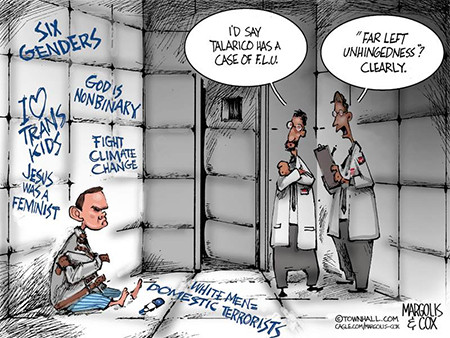
I had to laugh the other day when the Left-Wing Media came unglued about the swirling rumors over why Democrat Senate candidate James Talarico went missing for 9 days. You have to admit – it was a bit strange. But for Talarico, it seems to me no "dirty trick" was really necessary – after all, he wants a "welcome mat" at the border. He thinks "there are 6 genders." He’s a Christian who "hates" Christianity. And, he supports the radical trans agenda. His own words ought to be enough to stop his political career.

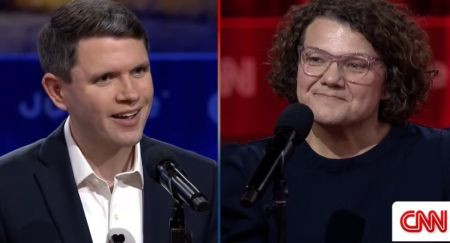
“If you can't provide policies, or support policies that protect the most innocent among us – the unborn child – how can we trust that you’re going to provide policies to protect the rest of Texans?” asked Jodi Hunt, a professor of Applied Ministry at the University of Dallas Wednesday evening during a CNN "Town Hall" Event. She was challenging the Democrat's U.S. Senate candidate, James Talarico, about many of his long-established stances from a Catholic Voter's point of view. “The Bible is not silent on abortion,” said Hunt. "There is the 10 Commandments, Thou Shalt Not Kill."

For years there have questions about whether Democrat Minnesota Congresswoman Ilhan Omar’s father lied or omitted information about his military role under a brutal Somalia dictatorship. Now there are allegations that Omar or her late father may have lied or omitted information to secure legal status and citizenship. The fraud investigation into Ms. Omar could result in charges – and potentially an effort to strip her of her citizenship. The Justice Department could pursue a Civil Denaturalization Case, which is not subject to a Statute of Limitations, meaning the investigation could even expand.
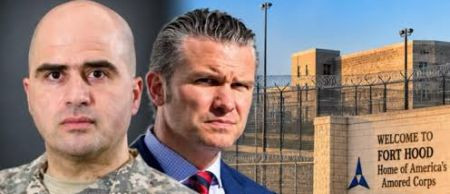
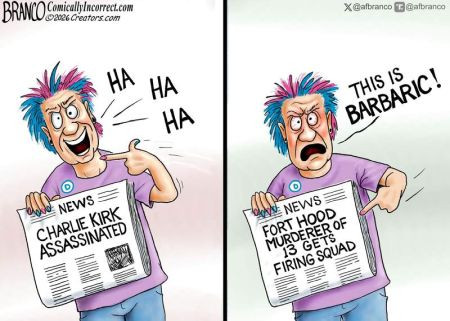
Consider this from the standpoint of the "messages" being sent. Are you a conservative? Pro-American and for our nation's cultural sense of decency that's now 250+ years old? The "message" of the executions of Charlie Kirk and Brian Thompson – as well as the attempts on President Trump's life – are remarkably clear. But the upcoming execution of jihadist, convicted murderer, and former Army Maj. Nidal Malik Hasan holds a different message. His execution – carried out by soldiers of the institution he betrayed – is aimed at different audiences. The former is aimed at you and me, the latter is aimed at terrorists supporting Radical Islam. One is terrorism, the other is accountability.

Governor Greg Abbott announced 84 Jobs and Education for Texans (JET) grants totaling over $20 million have been awarded to Texas public junior, state, and technical colleges; school districts; and open-enrollment charter schools. The JET grants, awarded through the Texas Workforce Commission (TWC), will help schools buy equipment to start or improve career and technical education (CTE) training programs that lead to high-demand careers.

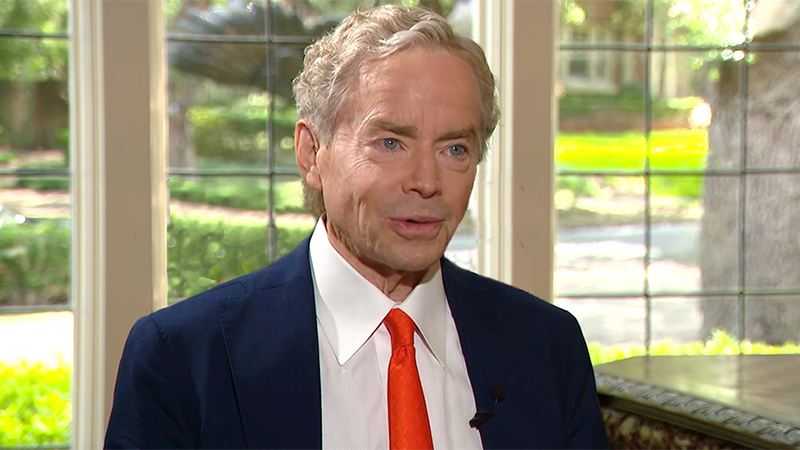
Texas Comptroller Don Huffines said many cities and counties can reduce property taxes due to increased sales tax revenue as local governments will receive $1.3 billion in allocations of net local sales tax collected in September, 11.6% more than a year ago. Net revenue reflects sales tax collections after refunds, overpayment credits and prepayment adjustments. Local amounts are also net of the state’s 2% administrative fee, which is deposited to the General Revenue Fund.
We've been skeptical it would ever happen, but New York Governor Kathy Hochul has stood up to the teachers' unions and brought her state into the new federal tax credit scholarship program created by the Big Beautiful Bill.Starting in tax year 2027 every U.S. taxpayer can donate up to $1700 single/$3400 married to a Scholarship Granting Organization and get the money back dollar-for-dollar on their federal taxes.

Riots in France. Protests on college campuses. Antisemitism running rampant. New York’s mayor accusing Israel of genocide on the 3rd anniversary of October 7th. It would appear that the intifada is already globalized and is part of three concurrent left-wing movements: the radical LGBTQ agenda, the rise of the Democratic Socialists of America, and the infiltration of radical Islam into American politics. These three ideologies have turned America upside down. All these things are what the Left calls “social justice” and the Right calls “culture rot.”
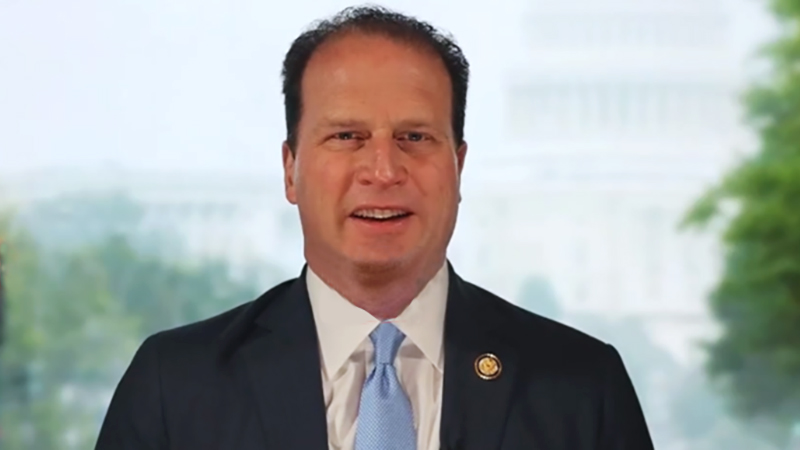
I am proud to have delivered a $750,000 investment to Concho County Hospital, Ballinger Memorial Hospital, and North Runnels Hospital through the Rural Health Transformation Program, a $50 billion national initiative to strengthen rural healthcare. For families in Concho County and the surrounding area, this funding is a lifeline. It means care closer to home, so they don’t have to drive over an hour to the nearest city when they or a loved one need medical attention.
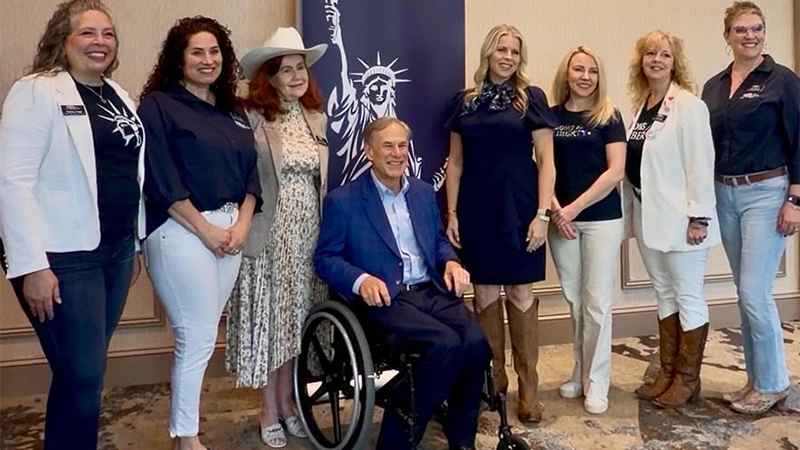
Governor Abbott emphasized that schools are for education, not indoctrination, and that parents deserve transparency in curriculum. The Governor also celebrated the historic education victories achieved in Texas, including signing the strongest parental right laws in the country, delivering the largest day-one school choice program in America, and signing the largest teacher pay raise in state history and record funding for public schools.